
Why Referral Management Is Essential for Care Coordination
- Seamless transitions between providers - Patients move between primary, specialty, and ancillary care smoothly, without lost information or miscommunication.
- Better patient experiences - Clear communication, proactive follow-ups, and fewer delays reduce stress and build confidence in care.
- Enhanced provider collaboration - When referring and receiving clinicians share up-to-date status and clinical details, teamwork improves and care decisions are better informed.
- Stronger clinical outcomes - Faster access to specialists supports timely diagnoses and interventions.
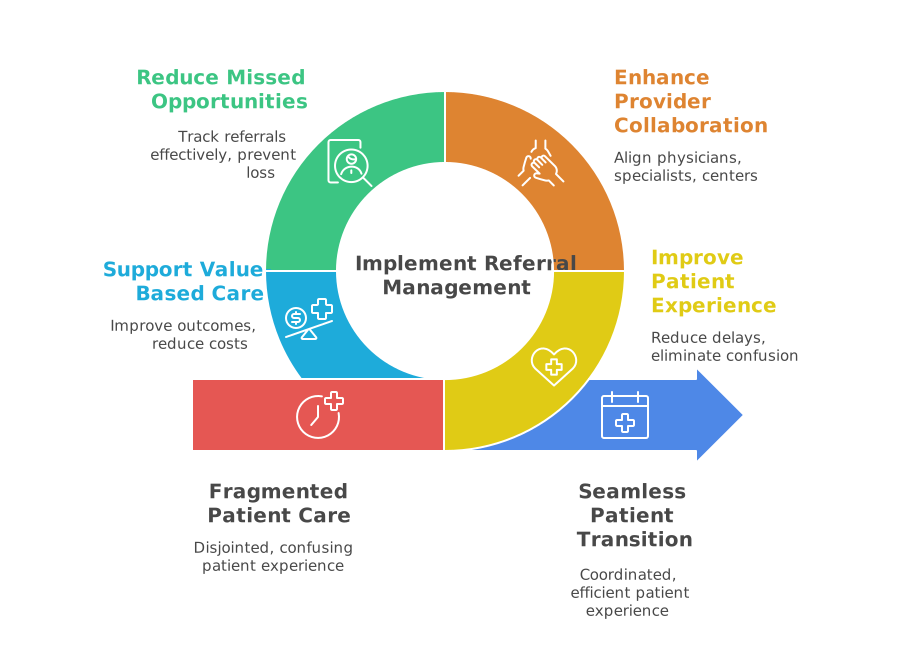
Common Challenges in Traditional Referral Processes
- Lost or delayed referrals due to paper-based tracking or incomplete workflows.
- Poor visibility into referral status, leaving providers unsure whether patients have completed appointments.
- Communication breakdowns between referring and specialist clinicians.
- Missed billable opportunities when referrals aren’t tracked to completion.
- Patient confusion or no-shows, often due to lack of reminders or clear instructions.
How Technology Enhances Referral Management
- Automating referral tracking: Referrals are logged, monitored, and updated in real time, so care teams always know where a patient is in the process.
- Centralizing status visibility: Dashboards provide a single view of all active referrals, making oversight and follow-up easier.
- Reducing no-shows: Automated reminders via text, email, or phone help ensure patients keep their specialist visits.
- Enabling secure data sharing: HIPAA-compliant communication protects patient privacy while improving clinical collaboration.
- Driving actionable insights: Referral analytics help practices identify bottlenecks, optimize processes, and plan for improved care paths.
structured, proactive coordination that supports patients every step of the way
The Role of Virtual Medical Office Support
Virtual Medical Office Support (VMOS)
- Track referrals from initiation to closure
- Coordinate scheduling with specialists
- Communicate clearly with patients about appointments and expectations
- Document referral activity accurately in the HER
- Provide referral completion reporting and insights
Benefits of Effective Referral Management
Improved patient satisfactionOptimized clinical outcomesGreater operational efficiencyRevenue protectionData for quality improvement
Final Thoughts